Dental pain, and treatments such as a root canal, can be as much of an emergency as any other physical symptom. According to the American Dental Association, more than 2 million people a year visit the emergency room for symptoms that turn out to be dental-related. When dealing with dental pain and related symptoms, you need to evaluate whether to wait and have the problem fixed at a routine appointment or get it handled right away.
Reasons to have a root canal
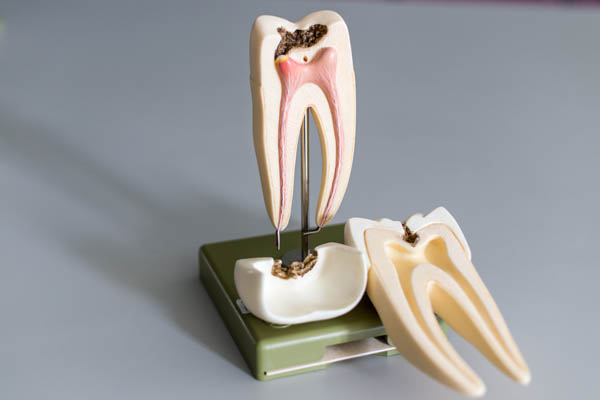
Root canals have to be performed when there is damage to the root system of a tooth. Within the root is a soft substance called pulp. This pulp contains tissue, nerves and blood vessels. When the pulp gets inflamed or infected, it can cause a variety of issues. A root canal removes the damaged tissue to fix the problem.
Routine root canals
Most root canals are not an emergency and can be handled at a scheduled appointment. While not an emergency, this type of problem should not be ignored. The sooner it is taken care of, the less pain the patient has to endure. These are some common symptoms that may call for a routine root canal:
- Pain and extreme sensitivity to hot or cold substances
- Pain while drinking or eating
- A tooth that has regular, throbbing pain
- A tooth that is discoloring to a gray or black color
- Gum pain around a tooth, or a tooth that is sore to touch
Emergency root canals
Some situations may call for an emergency root canal. These are situations that threaten the overall health of the patient and can affect quality of life. When any of the following occur, it is advised to call a dentist or endodontist right away:
- Redness and inflammation around the infected tooth
- A fever accompanying tooth pain that will not go away
- Swelling in the gums and tissue surrounding the infected tooth
- Heightened pain that affects the ability to function
- Inability to eat or drink due to tooth pain
The procedure
Despite what many people think, the root canal procedure itself is not very painful. The pain comes from the infection. In one to two appointments, the dental professional removes all of the infected material and repairs the damage. All painful symptoms should be gone after a successful procedure.
A root canal occurs through several sequential steps. To begin, the dentist or endodontist removes all of the infected pulp material inside the tooth’s root. This area is thoroughly cleaned to remove all bacteria. Next, an inert material made of paste and a rubber compound is inserted into the tooth’s root. Finally, the tooth is closed with either a crown or a filling. This seals off the tooth and protects the root system from further infection.
Conclusion
Tooth pain can be very frustrating and can impact every aspect of your life. Knowing why root canals are necessary and when an emergency treatment is justified can help you make the right choice in seeking dental treatment.
Are you considering a root canal in the Lone Tree area? Get more information at https://www.creeksideendo.com.
Check out what others are saying about our dental services on Yelp: Root Canal Treatment in Lone Tree, CO.
Related Posts
A root canal specialist can correct any problems that affect the pulp cavity. The internal parts of the tooth affect its health. Issues that occur will need immediate treatment. Here are the signs that you may need treatment from your root canal specialist.This happens when the individual consumes hot or cold foods and drinks. The…
Root canal treatment can effectively save an infected or otherwise compromised tooth. However, there are cases in which root canal retreatment is necessary to address complications or reinfections that arise after an initial root canal. Every patient should know several things about root canal retreatment, its benefits, and how to prepare for the procedure.Root canal…
An endodontist is a dental specialist who can diagnose and treat a severe dental abscess. A tooth abscess is a pocket of pus produced by a bacterial infection. Abscesses can form in different parts of the teeth or mouth for different reasons and generally do not resolve without treatment, often requiring endodontic care.Patients who are…
Do you have cracked teeth? Read on to learn more about treatment for cracked teeth. Such fractures need the services of an endodontist, a dental professional with many years of experience treating tooth pain and root canals. The American Association of Endodontists points out that timely intervention is important if you wish to save a…