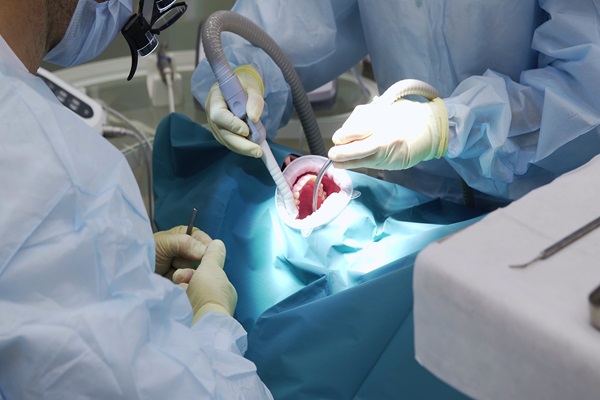
Commonly known as an apicoectomy, root canal surgery is a procedure that can help save your tooth in situations in which a non-surgical procedure cannot achieve the necessary results. Oral care has come a long way in the last few decades, from ultrasonic tools to clean teeth to digital X-rays that are more efficient and faster than the traditional film plates. Even some of the more complex procedures, such as root canals, use advanced technologies that reduce pain and healing time.
What is a root canal?
The pulp deep within a tooth can become infected for several reasons, from lack of dental care to an injury. If the infection goes untreated, it may require that the tooth be removed. A root canal helps save the tooth by removing the infected material.
There are four steps to the procedure, performed over two office visits. Local anesthesia is administered to numb the tooth. A small drill creates an access point to the tooth’s interior, and the damaged or infected pulp is removed. An antimicrobial solution helps kill any remaining bacteria to reduce the chance of infection. Once the chamber is cleaned and dried, a temporary filling is applied. The permanent crown replaces the temporary filling in about two weeks.
Endodontic microsurgery
According to the American Association of Endodontists, an apicoectomy is one of the most common surgical procedures performed to save a tooth. It is also called a root-end resection. After giving you a local anesthetic to help make you comfortable, the endodontist makes an incision and retracts the gum tissue near the tooth to expose the underlying bone. Inflamed or infected tissue and the root tip are removed.
Ultrasonic instruments and a special microscope are used to ensure the area is as clean as possible. Typically, a filling is used in the root, sealing the end of the root canal. The endodontist takes an X-ray of the area before finishing the procedure to ensure everything looks in order. Stitches close the gum tissue to encourage proper healing.
Surgery length
The amount of time it takes to complete the procedure depends on the location of the tooth and its root structure. Front teeth usually have one root. Molars and other teeth toward the back of your mouth generally have two or more. Nerves and blood vessels enter through the root, through the canal and into the pulp chamber to provide nourishment to the tooth. A typical root canal surgery takes 30 to 90 minutes, with those on the front teeth taking the shortest time and lower molars taking the longest.
Reasons for an apicoectomy
Colgate reports that root canal surgery can be necessary for a variety of circumstances. If you have had a non-surgical root canal that failed and there is still pain, your endodontist may schedule an apicoectomy. However, that is not the only situation in which the procedure is needed:
- The canal can be too narrow for the instruments in a non-surgical procedure if there is calcification
- The root surfaces or the surrounding bone is damaged
- Some tiny fractures or canals were not identified during a standard root canal
Conclusion
Proper oral hygiene is crucial to keeping your teeth and gums healthy. However, it is common for unexpected circumstances to affect a specific area of your mouth, resulting in the need for root canal surgery. Seeing a dental care professional on a regular basis can help ensure issues are identified early so that the procedure has the best outcome possible.
Are you considering root canal surgery in the Lone Tree area? Get more information at https://www.creeksideendo.com.
Check out what others are saying about our dental services on Yelp: Root Canal Surgery in Lone Tree, CO.
Related Posts
A root canal specialist can correct any problems that affect the pulp cavity. The internal parts of the tooth affect its health. Issues that occur will need immediate treatment. Here are the signs that you may need treatment from your root canal specialist.This happens when the individual consumes hot or cold foods and drinks. The…
Root canal treatment can effectively save an infected or otherwise compromised tooth. However, there are cases in which root canal retreatment is necessary to address complications or reinfections that arise after an initial root canal. Every patient should know several things about root canal retreatment, its benefits, and how to prepare for the procedure.Root canal…
An endodontist is a dental specialist who can diagnose and treat a severe dental abscess. A tooth abscess is a pocket of pus produced by a bacterial infection. Abscesses can form in different parts of the teeth or mouth for different reasons and generally do not resolve without treatment, often requiring endodontic care.Patients who are…
Do you have cracked teeth? Read on to learn more about treatment for cracked teeth. Such fractures need the services of an endodontist, a dental professional with many years of experience treating tooth pain and root canals. The American Association of Endodontists points out that timely intervention is important if you wish to save a…